


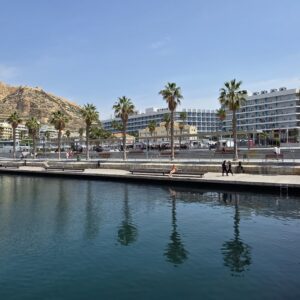
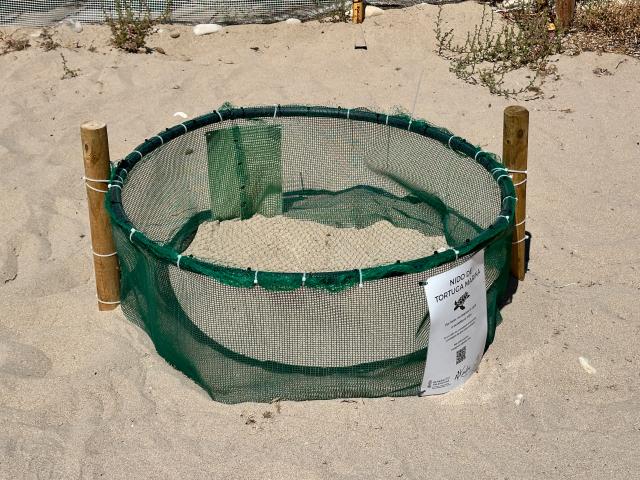
Forty-four loggerhead turtle hatchlings have successfully emerged from their nest on Muchavista beach in El Campello and made their way into the sea. The nest, which was discovered on 29th July near Rincón de la Zofra, contained a total of 61 eggs, meaning monitoring will continue in case more turtles hatch.

The hatching began in the early hours of Wednesday, 16th September. The first hatchlings started emerging around 1:20 am, and by 4:00 am, the first group had hatched. After being measured, weighed, and checked to confirm they were in excellent health, the small turtles were moved to the shore and released into the water.
Loggerhead turtles are an endangered species that select their nesting beaches carefully, making the discovery of a clutch in this area a significant cause for celebration. Volunteers dedicated to conservation monitored the site continuously to ensure an uninterrupted hatching process.
The peak moment occurred as the tiny sea turtles began emerging and crawling towards the sea, cheered on by watching volunteers and spectators. Team members from the Oceanogràfic de València will excavate the nest to check if any unhatched eggs remain buried.
The successful hatching brings weeks of site protection to a close. Round-the-clock monitoring had been intensified over recent days as hatching became imminent. On Tuesday, Jesús Tomás, a researcher from the Marine Zoology Unit at the Cavanilles Institute of the University of Valencia, visited the Muchavista beach site and predicted that the “caretta caretta” eggs would hatch within hours.
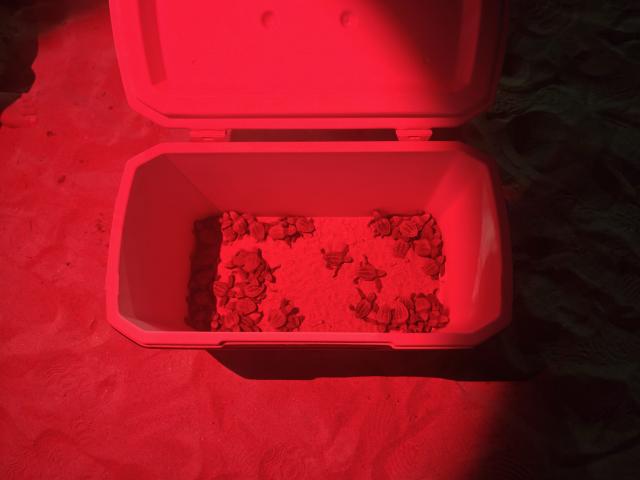
His forecast proved accurate as the hatchlings emerged during the night. The scene brought huge excitement to the beach camp near Rincón de la Zofra, which was managed by volunteers from the national association Ágoras Climáticas, an organization dedicated to raising climate change awareness. Susi Iváñez, who coordinated the operation alongside Carlos Bernárdez, Pepe Huertas, and José Miguel Gil, noted that the night-shift team was thrilled the birth happened on their watch.
Organisers expressed deep gratitude to more than 200 volunteers who worked shifts day and night to guard the nest. The camp was organised by the NGO Xaloc Mar, which supplied equipment, alongside Ágoras Climáticas and El Campello Town Hall, sponsored by Fundación Reale and Sea Shepherd España. The initiative was supported by the Ministry for the Ecological Transition, the Regional Ministry of Environment, Territorio Natura, the University of Valencia, the Polytechnic University of Valencia, and other scientific and local bodies.
Throughout the monitoring period, volunteers used the camp’s presence to educate local residents and visitors. Weekly activities were hosted for children and teenagers to teach them about nature conservation, loggerhead life cycles, and threats to marine life, such as pollution and climate change.
The presence of a loggerhead nesting site on Alicante’s coastline is a vital event for conservation teams, as rising nesting occurrences in the region prompt increased surveillance and training efforts.
Other Articles

Torrevieja barracks renovation project tendered with 96,080 euro budget
Three people injured after dangerous goods lorry leaves A-7 in Cox