



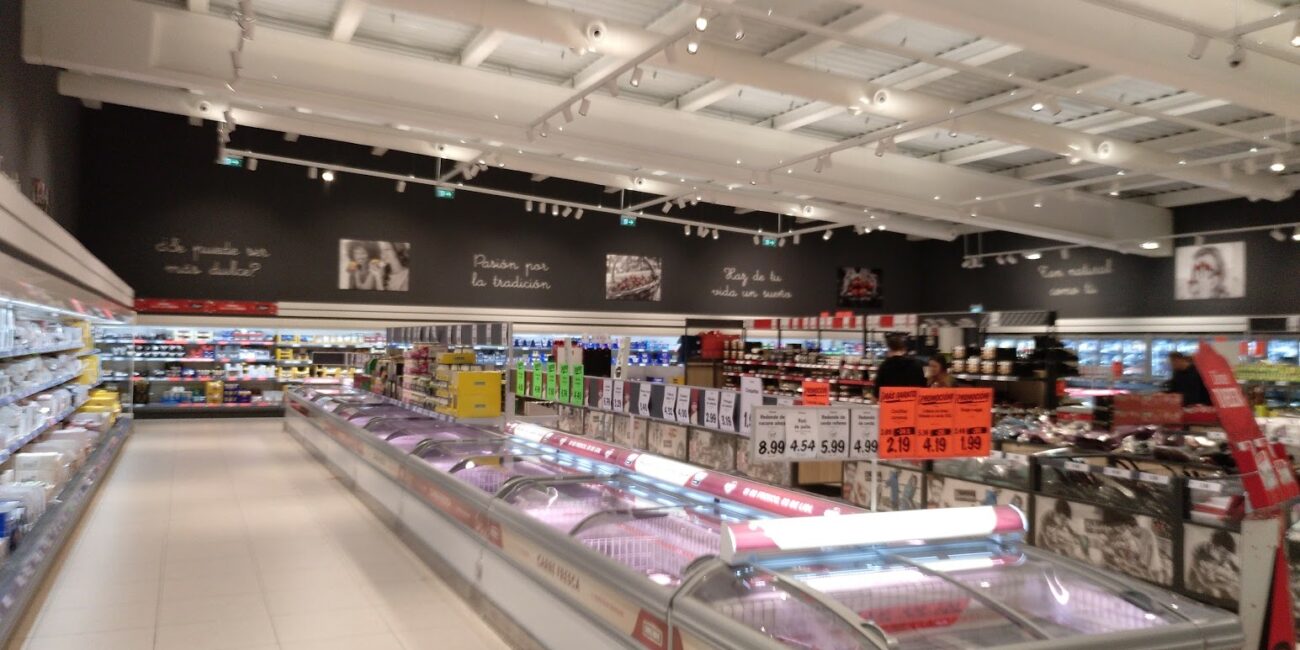
Aldi has led price containment over the past year when compared to the wider retail market. According to the latest figures from Worldpanel by Numerator, since August 2025, the company has consistently positioned itself as the leading supermarket holding back average prices across its range, excluding fresh produce, recording differences of up to 2.5 percentage points lower at various points throughout the year.

This moderation in prices has been even more pronounced across fresh produce, which continues to represent an increasingly significant portion of household grocery baskets. Worldpanel by Numerator data reveals that the average price paid by Aldi shoppers for its selection of fresh items is 14.5% lower than the remainder of the retail sector.
This variation has been clearly visible over the past twelve months, with Aldi customers paying less on average across several essential categories in direct contrast to wider market trends. Specifically, the average price paid for fruit dropped by 1.7% at Aldi, compared to a 2.6% rise across the sector as a whole. A comparable pattern was registered in fresh fish and seafood, which dropped by 1.2% at the discount chain whilst rising by 5.2% across the wider market.
In terms of fresh meat, poultry and chicken prices fell by 1.6% in the company’s stores, countering a 1.6% general rise, whilst fresh pork dropped by 3.2%, moving away from the modest 0.3% increase recorded across the wider sector.
This pricing trend allows Aldi to continue offering a complete grocery basket at low prices, helping households maximise their shopping budgets. The retailer’s business model relies primarily on private label product quality paired with consistently low prices throughout the year.
Through its discount approach, Aldi customers can save up to 2,417 euro per year on their shopping. This estimated annual saving has grown by more than 430 euro over the last six months, climbing from 1,986 euro to more than 2,400 euro in potential customer savings.
This pricing structure and the expanding consumption of own-brand items across Spain have strengthened consumer trust in the chain. At present, Aldi reaches 41.4% of Spanish households and leads the market in customer visit frequency growth, representing the retailer with the highest increase in repeat store visits according to Worldpanel by Numerator.
Furthermore, the company has led the growth of private label grocery shoppers in Spain since 2023. Over this period, it has gained 965,000 new customers and now exceeds 7.36 million regular buyers of its own brands.
Operating under this model, Aldi continues to help families manage their household food expenditure. The supermarket chain currently holds a 3.6% market share in own-brand goods and contributes 12% of the overall value growth within this retail segment in Spain.
Other Articles