
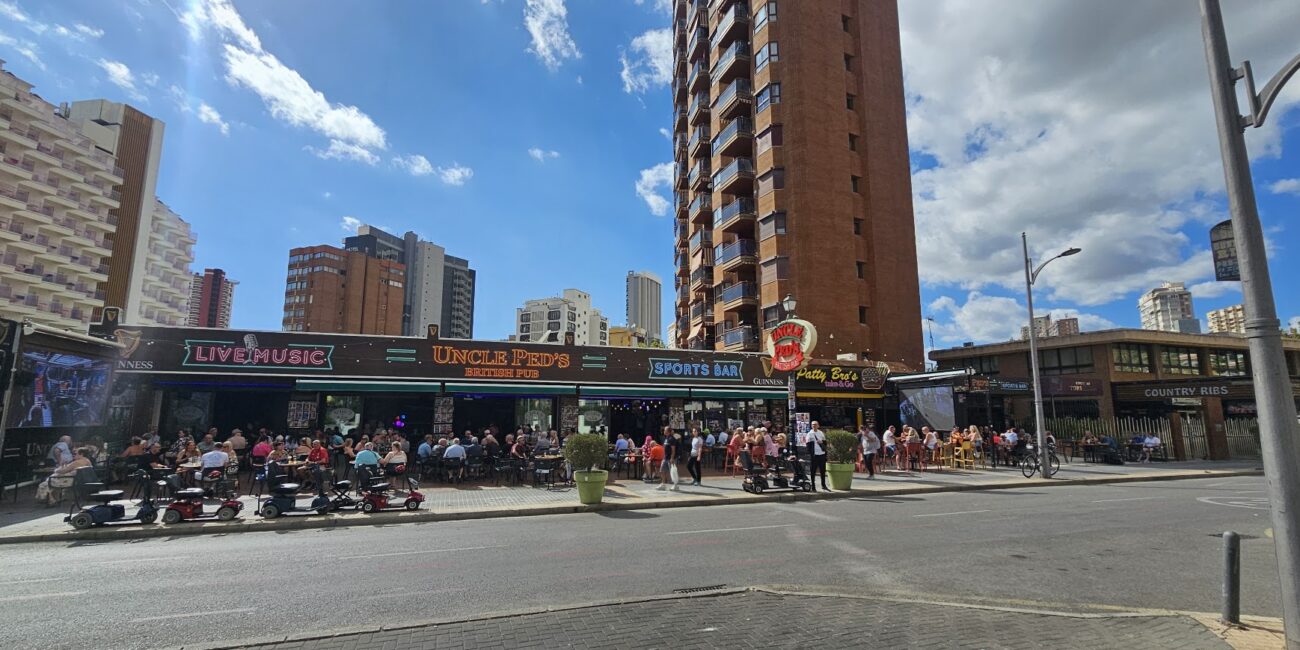
Benidorm closed September 2026 with an average hotel occupancy rate of 91.7 per cent according to data from hotel association HOSBEC, improving on the previous year and defying the post-summer slowdown. British visitors represented the largest share of hotel guests at 43.5 per cent, outpacing domestic holidaymakers and other European markets. While forward bookings for early October remained strong at over 87 per cent, industry representatives warned that escalating operating costs for energy, supplies and labour continue to put pressure on hotel profitability despite busy rooms.
Hotel occupancy in Benidorm reached 91.7 per cent during September 2026, marking an increase from the 90.3 per cent recorded across the same period last year. Official figures published by the hotel business association HOSBEC confirm that the coastal resort maintained strong tourism activity even after the peak summer months had concluded. The British market proved decisive, accounting for 43.5 per cent of all staying hotel guests, ahead of the domestic Spanish market at 34.8 per cent. However, the business association has issued a word of caution, warning that rising operational costs continue to threaten business profitability despite high visitor numbers.

The end of August did not bring a sudden downturn for accommodation providers in Benidorm. Average occupancy remained comfortably above 91 per cent throughout September, representing a rise of 1.4 percentage points compared to September 2025. This performance highlights the municipality’s capacity to draw holidaymakers beyond July and August, although the statistical data specifically measures hotel room uptake within the employer association’s sampling rather than the entirety of tourist apartments, rented holiday homes or campsites in the area.
Demand remained notably steady throughout the entire month. During the second fortnight of September, hotel occupancy in Benidorm stood at 90.8 per cent, slightly ahead of the 90.6 per cent logged during the latter half of September 2025. For hoteliers, sustaining balanced demand across late summer helps organise business activity and reduces reliance purely on the peak summer weeks.
British holidaymakers represented the backbone of the resort’s autumn trade. Over the full month, tourists from the United Kingdom made up 43.5 per cent of all hotel guests, creating an 8.7 percentage point gap ahead of Spanish visitors, who made up 34.8 per cent. The British presence strengthened further during the second half of September, climbing to 45.8 per cent of the total customer base, while domestic travellers accounted for 35 per cent. Other European source markets also contributed to the figures, including Portugal with 5 per cent, the Netherlands with 2.8 per cent, and both Belgium and Ireland contributing 2.4 per cent each.
Across the different hotel categories in Benidorm, two-star establishments registered the most notable improvement, reaching an average occupancy of 92.9 per cent compared to 87.6 per cent in September 2025, which represents a 5.3 percentage point rise. Three-star hotels reached 91.8 per cent, up from 90.3 per cent the previous year, while four-star properties recorded 91.7 per cent occupancy, climbing by one percentage point over twelve months.
The positive performance was also reflected across other statistical areas compiled by HOSBEC. Across the broader Costa Blanca zone excluding Benidorm, hotel occupancy averaged 86 per cent in September, up from 84.7 per cent in 2025. In the Alicante Sur area, occupancy reached 82 per cent compared to 81.3 per cent in September 2025, showing particularly strong gains during the second fortnight when it rose to 78.4 per cent from 72.9 per cent a year earlier.
Looking ahead, early booking indications for October suggested a positive start for Benidorm, with confirmed reservations for the first fortnight of the month standing at 87.1 per cent, outpacing Costa Blanca at 79 per cent, Alicante Sur at 72.9 per cent, and the wider Valencian Community average of 82.8 per cent.
Despite the high occupancy levels, HOSBEC stressed that having full hotels does not automatically translate into stronger profit margins. The business association pointed out that rising overheads, including energy, food and beverage supplies, labour expenses, tax pressures and wider inflation, continue to squeeze operating results, as businesses are not always able to pass these higher costs on to retail prices without affecting competitiveness. The issue of costs also remains central to the sector’s concerns regarding the pricing and economic viability of the upcoming Imserso social tourism programme.
Other Articles