

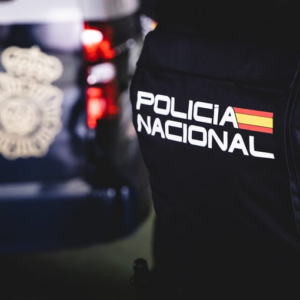


The Orihuela Local Police intend to strengthen the service’s operational resources with the creation of a Canine Unit. In their Christmas greeting last year, a campaign that usually generates great anticipation, the officers envisioned its implementation sometime in 2026 as an expansion of their resources.

Finally, the City Council has now put out to tender a minor contract for €14,520 for the acquisition of a dog suitable for this service, including its training in basic obedience and detection of narcotics, care and the initial training of the canine guide agent, an essential first step to start an activity focused on preventive, deterrent, educational and police support actions.
One of its main tasks will be to detect illegal conduct, especially regarding the consumption and possession of narcotic substances in public spaces, school environments, parks, leisure areas and mass events such as patron saint festivals, markets and sports facilities, with the aim of expanding the work already done by the Local Police in this area.
Therefore, he must be especially accustomed to different operating environments and detection work in vehicles, parcels, building interiors and people.
These actions will be preventive, deterrent and supportive in nature, although also when facts are detected that could constitute an administrative or criminal offence, referring them to the competent State Security Forces and Corps.
Furthermore, the Canine Unit aims to develop educational, preventative, and outreach activities, promoting awareness of responsible pet ownership, community relations, civic responsibility, urban hygiene, and drug abuse prevention. In this capacity, it may participate in training activities in schools, associations, community groups, and municipal programmes through talks, controlled demonstrations, and information campaigns.
The supply contract stipulates that the winning bidder must deliver the dog within nine months, with the requirement that it be under 18 months of age, with a passport, up-to-date vaccinations and deworming, although reducing the term is a criterion that will be taken into account in the award.
The dogs must be properly selected, trained, and certified, preferably owned by the municipality, although dogs belonging to officers may also be accepted through a transfer agreement. When the time comes for a dog to retire or if it can no longer serve due to illness or injury, the City Council will prioritise its adoption by the handler or will seek a suitable home for it.
This new specialised unit, which will report directly to the Headquarters, will also include canine handlers selected based on their training, aptitude, availability and commitment. Each dog will be assigned to a single handler to ensure the bond, stability of training and the animal’s well-being. The handler will be responsible for the dog’s daily care and will be the only one with whom it can perform police duties.
In addition, the Canine Unit will require a police vehicle adapted with ventilation, security, insulation and suitable temperature conditions.
The contract proposal reflects that the municipality presents a large and complex territorial reality, with an urban centre, outlying districts, urbanisations, rural areas, natural spaces, beaches and a significant tourist and seasonal influx, which requires specialised police resources, and the use of service dogs is an effective tool to reinforce prevention, surveillance and security in high-traffic areas.
Other Articles

Orihuela police checkpoint pursuit ends in arrest after officer run over
Torrevieja Desalination Plant Expansion Delayed Until May 2027