
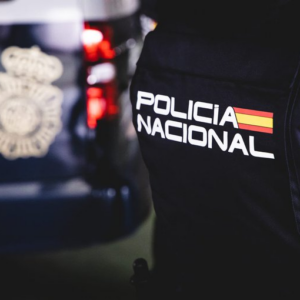


Less than a month ago, the Calpe Local Police equipped their vehicles with mobile defibrillators. On Wednesday, 27th May, this initiative proved its worth by saving a woman’s life.

The Calpe police headquarters received an alert via 112, reporting that a woman was lying on her kitchen floor and required urgent medical assistance. Upon arriving at the property, officers found someone already performing cardiopulmonary resuscitation (CPR) on the victim, who was lying on her back.
A Local Police officer deployed and utilized a semi-automatic external defibrillator (AED), delivering the initial electrical shock. Shortly afterwards, a Basic Life Support (BLS) unit arrived at the scene. These healthcare professionals continued the resuscitation efforts and administered two additional shocks using the same device. The police officer remained on hand to assist with the CPR until being relieved by medical staff.
When the SAMU intensive care ambulance unit arrived, they took over the medical intervention and successfully restored the patient’s pulse and vital signs. A few minutes later, the woman suffered another cardiorespiratory arrest, but she was once again successfully resuscitated. She was eventually transferred alive to the Dénia District Hospital at around 15:15.
Later, the officers received a congratulatory phone call from the technician of the BLS unit, who emphasised that if it had not been for the rapid response of the police and the use of the AED, the patient would not have arrived at the hospital alive.
This case highlights the vital importance of the scheme, which has provided the Local Police with mobile defibrillators and training to respond to these types of emergencies.
Defibrillators in Calpe: an ongoing project
Last April, Calp Town Council began installing defibrillators after awarding a contract for the supply, installation, and maintenance of semi-automatic external devices, representing a total estimated investment of 157,318 euro. This measure aims to improve emergency response times for cardiac incidents in public spaces.
The first phase involves the installation and maintenance of 11 fixed defibrillators and the training of 35 people. The devices are located at strategic points across the municipality, including the Civic Centre, the House of Culture, the Police checkpoint, the Town Hall, the Municipal Cemetery, the Punt Jove youth centre, the Maite Boronat Occupational Centre, the Casa Nova University Campus, the tourist offices in Plaza del Mosquit and Avenida Ejércitos Españoles, as well as the Social Welfare department building.
The second phase includes six portable defibrillators for mobile operations, five of which are inside Local Police vehicles and one in a Protección Civil vehicle, alongside training for 60 people.
The third phase plans for the installation of 11 fixed solar-powered defibrillators, ensuring autonomous operation on the Arenal-Bol and La Fossa beaches (five on each beach) and one in Plaza de la Constitución. In addition, 15 people will be trained, and free training will be offered to staff at hospitality establishments.
Finally, the last phase ensures the maintenance of existing defibrillators at municipal sports facilities and the training of 15 people. This phase does not include new equipment but guarantees that the current devices remain fully operational.

