


The second professional training examination to drive a taxi in the municipality of Orihuela has dealt a harsh blow to candidates hoping to secure one of the eight new licences issued by the City Council under a concession agreement.

The examining board has published the results, revealing a disheartening outcome: only two of the 22 applicants, who had already cleared the initial psychometric test, managed to pass. The successful candidates achieved marks of just 5.38 and 6.08, barely scraping through given that a minimum of five points was required.
Even a biomedical engineer failed to reach the threshold, scoring just over four points. Many applicants were caught off guard by the marking scheme, which deducted 25% of a correct answer’s value for every incorrect response. Furthermore, most found themselves completely baffled by a large proportion of the 60 questions.
The exam did not merely cover vehicles, regulations, infractions, shared service areas, or fare zones. Instead, it demanded an exhaustive, in-depth knowledge of the municipality. Candidates were tested not only on street names—such as the locations of Luceros and Cristo de Zalamea streets—but also on complex sociocultural aspects. From question 17 onwards, applicants remarked that the paper seemed specifically designed to test one’s deep-rooted connection to Orihuela.
Examples of the questions included identifying which air-raid shelter is open to the public, the location of the Municipal Nativity Scene Museum, when the Medieval Market is held, and where the Tuesday market takes place. Candidates were also asked to name the holiday on 17th July, state the total population of the municipality, and identify the population zone of the coast, including the hamlet of Torremendo. Other queries demanded the exact locations of the census office, the ADIS Foundation, the bar association, the Mudic (Museum of Diligence), and the vocational training and employment centre. One specific question asked which hamlet lies exactly 32 kilometres from the town centre.
The test also required detailed route knowledge, such as the directions from the station to the Miguel Hernández House Museum, or the itinerary from the Glorieta to the cathedral. Coastal locations were heavily featured, with questions targeting the Town Hall, the Municipal Sports Centre, the Post Office, the Emergency Centre, and the Hotel La Zenia.
Furthermore, candidates had to know the exact number of health centres dependent on the regional ministry located on the coast, how many medical offices operate in the outlying districts, which health centre is located on Avenida Teodomiro, and the precise distance from the roundabout on the CV-91 road to the Vega Baja Hospital.
Candidate claims and appeals
The nature of the exam has provoked widespread anger. One applicant branded the test ridiculous, arguing that it is unnecessary to ask for directions to health centres or shopping malls when all modern vehicles are equipped with GPS. He also revealed intentions to challenge several questions, claiming recent legal changes mean many of the questions are now entirely outdated. Given the somber atmosphere after the results were published, numerous other candidates are expected to lodge similar appeals. Another applicant expressed frustration after being asked to certify his proficiency in Spanish despite being Latin American.
Candidates now have five business days to submit formal claims or appeals. The tribunal must resolve these submissions within a maximum of a further five business days. Following this resolution, the final list of scores and successful applicants will be published, officially declaring them eligible for the professional competence certificate required to provide taxi services.
On Thursday, the same day the marks were released, the Councillor for Transport, Víctor Sigüenza, confirmed that the procedure for granting the eight new licences was moving forward. He assured that if the scheduled deadlines are respected, the allocation of the new licences could be finalised during the upcoming month of July.
Long-standing taxi shortage
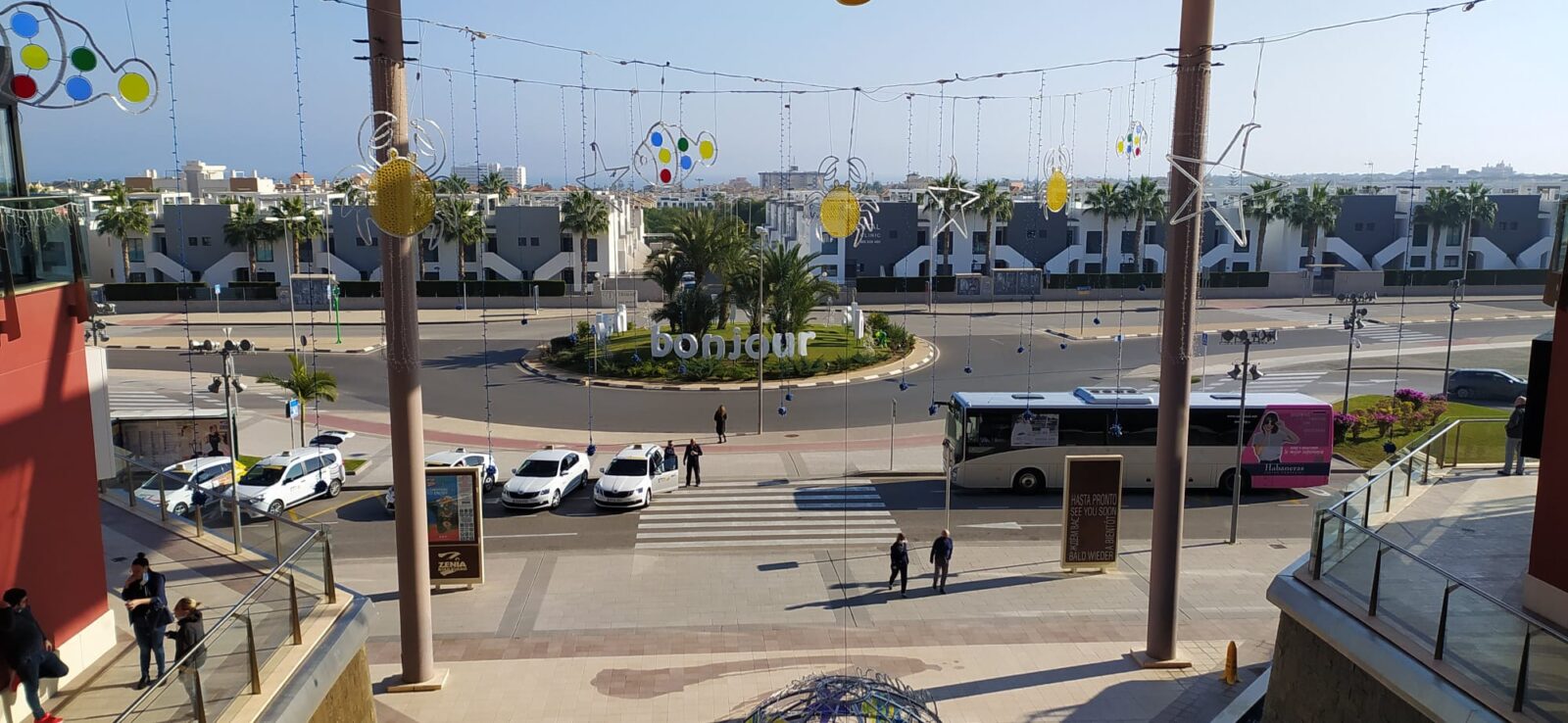
The process to grant these permits has been pending since 2015 and only began moving a year ago. Taxi services in the municipality are currently restricted to 42 authorisations—a figure that has remained unchanged since 2005. This stagnation persists despite the population growing to 88,000 inhabitants. Around 30,000 of these residents are concentrated on the coast, an area that also sees a massive influx of transient visitors due to the high volume of tourist accommodation. Unofficial estimates suggest the coastal population can soar to 100,000 during the summer season.
By law, there should be one taxi for every thousand registered residents. The severe shortage of transport options in the face of such high demand has triggered unscrupulous practices. Unlicensed individuals are openly operating illegal taxis to transport passengers to destinations such as Torrevieja, Elche, Alicante Airport, or Corvera Airport in Murcia.
The shortage has also fuelled speculation among existing concession holders. During the last plenary session, the political group Ciudadanos presented a motion to increase the number of licences and VTCs, pointing out that individuals are offering to sell their taxi licence for 195,000 euro. The motion was approved with votes in favour from the remaining political groups, while the PP abstained.
The rules governing the allocation of the eight new licences were published in the Official Gazette of the Province a year ago. The process had been gridlocked since 2022, a year when the City Council originally issued 15 licences, despite the regional government authorising 30. That initial move was challenged in the administrative courts during the term of the PSOE and Ciudadanos parties. The legal dispute eventually led to an agreement with the taxi sector in April 2023, which successfully reduced the final number of new licences to eight.