



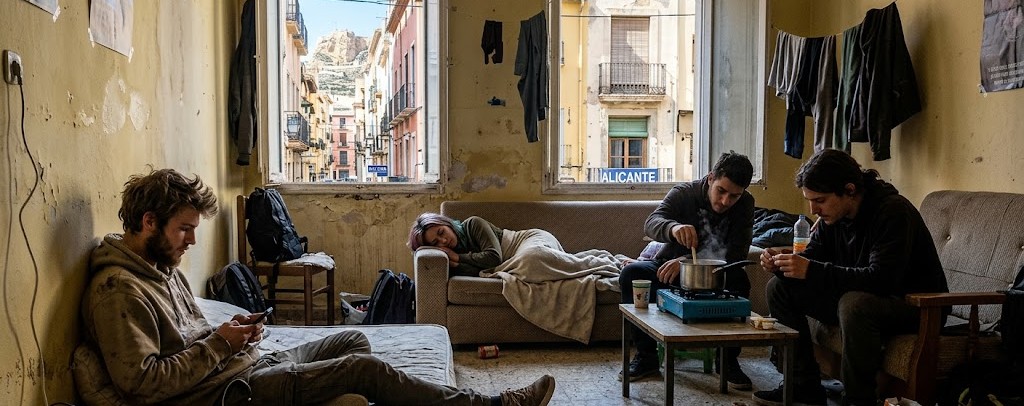
With the summer countdown underway, thousands of citizens with second homes in the province of Alicante are preparing for their holidays on the Mediterranean. However, this period of rest on the Costa Blanca can be disrupted by discovering that their property is inhabited by squatters, a phenomenon that continues to grow year after year.

The property market in Alicante includes a significant percentage of second homes belonging to individuals who live in Madrid or the interior of the country. These properties have become one of the favourite targets for squatters. Consequently, the province recorded a 46.88 per cent increase in incidents at second homes during 2025 compared to the previous year, with squatting cases doubling according to a report by Sector Alarm.
The president of the Association of Young Lawyers, María Ramón Abarca, explains that there is not necessarily a rise in squatting instances during the summer, but rather an increase in their discovery. Property owners do not visit the house during the year and only realise there is a problem when they arrive for their summer holidays.
The expert points out that alongside the high numbers of illegal entries, the concern stems from the difficulty of subsequently evicting the squatters. If swift action is not taken, this process can drag on for years. The slowness of the judicial system is further compounded by a recent structural reorganisation of the courts. These factors drive many owners to pay the occupants to leave the property rather than waiting to recover their home through legal channels.
Faced with this sluggishness, owners end up paying the occupants sums such as 5,000 euro or 6,000 euro to abandon the property, as it works out cheaper than hiring lawyers, starting the procedure, and losing rental income for years. Legal proceedings are taking even longer than usual because the court system is changing from traditional courts to sections, temporarily pausing activity during the transition and forcing citizens to reach financial agreements before going to court.
Furthermore, a trend known as “inquilino-okupacion” (tenant-squatting) has now surpassed the squatting of empty houses. This involves individuals who have rented a home and, once the contract expires or is terminated, refuse to leave the property and stop paying. People choose to stay due to financial reasons, the inability to pay high rental prices, or because they have settled their lives and have children in nearby schools. Cases of this have also occurred in tourist flats, where individuals rent for a single week and then refuse to leave to avoid further payments.
Despite these difficulties, a Supreme Court ruling establishing that second homes also constitute a primary dwelling—provided they have not been abandoned for years—has strengthened legal protections. Owners can now report the offense as breaking and entering rather than simple occupation. Even so, due to fear and distrust surrounding tenant-squatting, more owners are choosing to keep their properties empty rather than letting them out.

